The body is the first architecture, the singular presence through which scale is felt and measured, the site where space confirms or denies belonging. Merleau-Ponty spoke of the lived body as a hinge of perception, yet this hinge also twists, dislocates, and estranges—making one at home or foreign in the very same terrain. Foucault showed how the body is a political topography, inscribed by forces of discipline, surveillance, and control, while Butler revealed it as performative, sustained through repeated gestures that both stabilize and destabilize identity. To inhabit space is never neutral: the body confronts, resists, identifies, or withdraws, carrying alienation as much as intimacy.
In choreography the body becomes explicit, its gestures staging the negotiations of power, desire, and rhythm that underlie even the choreography of daily life. Architecture and landscape are never still backdrops to this, but rather partners and adversaries in the unfolding of movement. To design with the body in mind is to acknowledge it as a sensorial device, a distributor of the sensible, the medium through which perception and meaning pass.
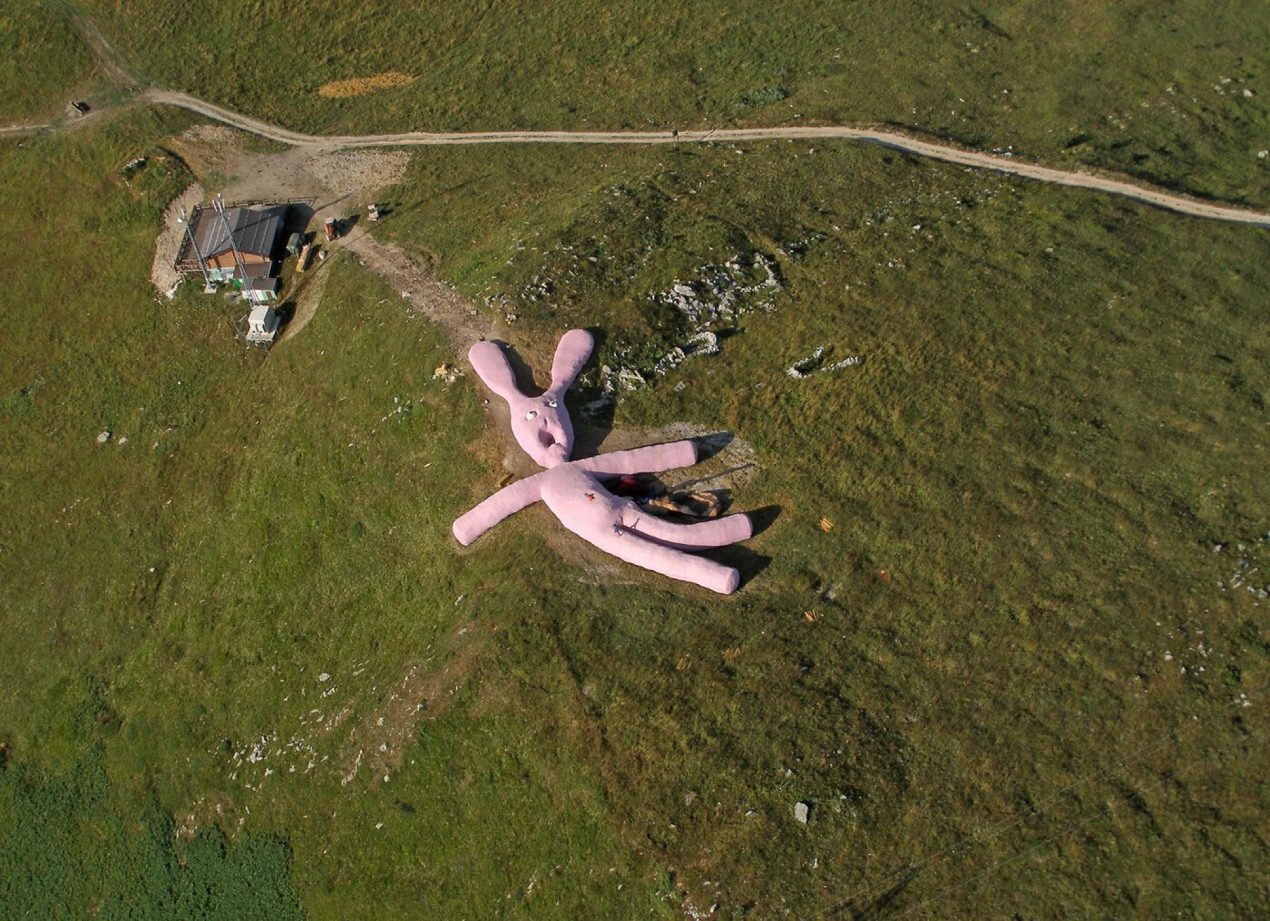
Recently, a case of a huge pink rabbit lying ‘dead’ in a mountainous terrain circulated on social media. The odd situation caught our attention. Hase by Gelitin produces a defamiliarising effect on the landscape — the body of a dreamy vernacular landscape is invaded.
Data Through Design (DxD) is pleased to announce the opening of CORPUS: BODIES OF DATA A public exhibition of ten data-driven, interdisciplinary art works. The opening reception will be Friday, March 21 starting at 6:30 pm with (free) tickets available through event registration. The exhibition will be presented in partnership with BRIC in Brooklyn, NY […]
Soundscapes The experience of silence and sound in the landscape International Landscape Study Days Thursday 22-Friday 23 February 2024, Treviso and online Friday 16 February 2024, from 5 pm, online preview The 20th edition of the International Landscape Study Days, organised by Fondazione Benetton Studi Ricerche, will be held in Treviso (at the Palazzo Bomben […]
Tim Waterman is Professor of Landscape Theory and Inter-Programme Collaboration Director at the Bartlett School of Architecture, UCL. He is Chair of the Landscape Research Group (LRG), a Non-Executive Director of the digital arts collective Furtherfield, and an advisor to the Centre for Landscape Democracy at the Norwegian University of Life Sciences. He is also […]
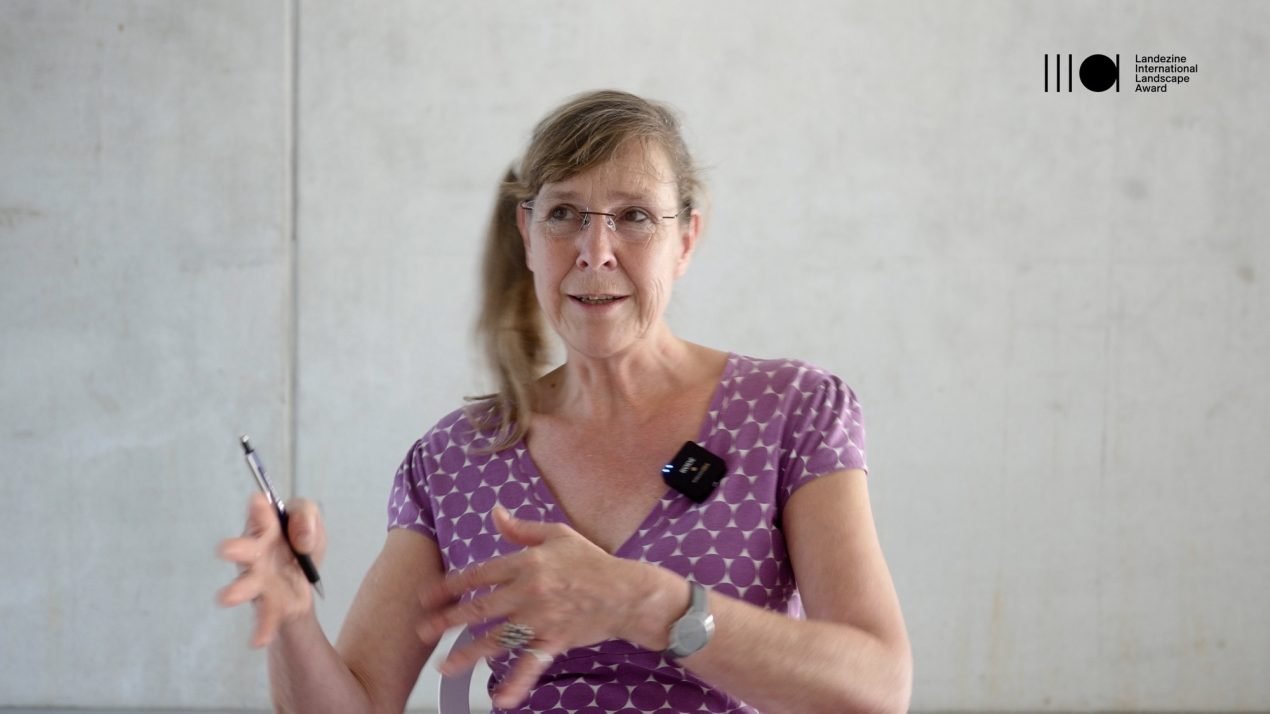
In this interview, Zaš Brezar talks to Prof. Dr. Lisa Diedrich, the winner of LILA 2023 Honour Award. She speaks about her professional development throughout the years and specifically about being a ‘straddler’ between professional practice and academia. She references several books and projects that inspire her as a landscape architect, architect, journalist and especially […]
main photo: British women on bench. Kew Gardens, London, England. photo by Marc Treib How does the body-landscape relationship evolve in the Anthropocene? By ‘body” we mean an active presence, an essential part of a world which is transformed and reveals itself to us through our physical state. And ‘landscape’ is intended as every environment […]
To provide the best experiences, we use technologies like cookies to store and/or access device information. Consenting to these technologies will allow us to process data such as browsing behavior or unique IDs on this site. Not consenting or withdrawing consent, may adversely affect certain features and functions.
Functional
Always active
The technical storage or access is strictly necessary for the legitimate purpose of enabling the use of a specific service explicitly requested by the subscriber or user, or for the sole purpose of carrying out the transmission of a communication over an electronic communications network.
Preferences
The technical storage or access is necessary for the legitimate purpose of storing preferences that are not requested by the subscriber or user.
Statistics
The technical storage or access that is used exclusively for statistical purposes.The technical storage or access that is used exclusively for anonymous statistical purposes. Without a subpoena, voluntary compliance on the part of your Internet Service Provider, or additional records from a third party, information stored or retrieved for this purpose alone cannot usually be used to identify you.
Marketing
The technical storage or access is required to create user profiles to send advertising, or to track the user on a website or across several websites for similar marketing purposes.
To provide the best experiences, we use technologies like cookies to store and/or access device information. Consenting to these technologies will allow us to process data such as browsing behavior or unique IDs on this site. Not consenting or withdrawing consent, may adversely affect certain features and functions.
Functional
Always active
The technical storage or access is strictly necessary for the legitimate purpose of enabling the use of a specific service explicitly requested by the subscriber or user, or for the sole purpose of carrying out the transmission of a communication over an electronic communications network.
Preferences
The technical storage or access is necessary for the legitimate purpose of storing preferences that are not requested by the subscriber or user.
Statistics
The technical storage or access that is used exclusively for statistical purposes.The technical storage or access that is used exclusively for anonymous statistical purposes. Without a subpoena, voluntary compliance on the part of your Internet Service Provider, or additional records from a third party, information stored or retrieved for this purpose alone cannot usually be used to identify you.
Marketing
The technical storage or access is required to create user profiles to send advertising, or to track the user on a website or across several websites for similar marketing purposes.