




In this year’s review, we examined which Featured Articles were read most. To ensure consistency, readership was measured over a one-month period following each article’s publication. The most visited article, Deep Landscape by Elisabeth Sjödahl, indicates a sustained interest in fundamental landscape processes and elements: bedrock, water, and soil—the vertical section of the landscapes we inhabit.
The selection of the twenty most-read articles shows high interest in the work of peers, practice and contemporary approaches to landscape architecture, featuring work by offices such as SLA, The Landscape Studio, and Ganz Landschaftsarchitekten, alongside typological overviews supported by case-studies. Across the selection, a recurring “buzz-theme” becomes apparent: forests. Appearing in symposia, books, and articles, forests are examined as ecological systems, urban design elements, metaphors, and cultural constructs.
The discipline’s self-examination is reflected in the interest in philosophical perspectives from outside the profession, which offer insight beyond appearance and convention. Interest in emerging technologies is also evident, indicating attention to changing tools and conditions of practice. Taken together, the articles point to a shared ethos. Themes of care and the relationship between human and more-than-human systems recur throughout the selected articles, without being resolved into a single position.
20. Forest Urbanisms: New Non-human and Human Ecologies for the 21st Century by Bruno De Meulder and Kelly Shannon

Interview by Urška Škerl with editors of Forest Urbanisms, Bruno De Meulder and Kelly Shannon, professors at Leuven, on the concept, underlying ideas and practice examples:
“Forest Urbanisms is radical. We are living in very troubling times where radical thinking and extreme experimental and built projects are a vital necessity. Since the advent of agriculture and accelerating through the Industrial Revolution until today, humankind has, in the words of William Thomas (1956), fundamentally changed the face of the Earth, transforming the ‘as found’ forest occupation into one that sat alongside vast territories of cultivation and human settlements. The cyclic, self-renewing feedback loops of the biosphere were irrevocably, perhaps irreparably, disturbed. Forest Urbanisms proclaims a renewed occupation of Earth.”
19. Remembering Dieter Kienast, Swiss Landscape Architect

Article by Anette Freytag, a professor of the History and Theory of Landscape Architecture at Rutgers University, published on what would be Kienast’s 80th birthday, on his work and influential career:
“There is a widespread consensus: cities need more ‘green’—on rooftops and façades, through new trees and green spaces—a network of nature to support the equally endangered biodiversity. Yet hardly anyone talks about form—about what this green should look like, and about the spatial and social consequences of planting a tree or a shrub. And that such interventions require design. One potentially utopian idea—one that Kienast likely would have embraced—is that emotional connection to nature, through the personal experience of designed environments, might do more to foster climate-conscious behavior than all the alarming data sets combined.”
18. Healing Landscapes: Designing with Empathy in the Shadows of Trauma

Article on designing spaces for mental health improvement by Tamer-Georges Musharbesh, a landscape architect with experience across the U.S., the Middle East, and Africa:
“Mental health disorders such as depression, post-traumatic stress disorder (PTSD), and paranoid schizophrenia affect masses of people worldwide. These conditions not only challenge individuals but also deeply affect their relatives and communities. While clinical treatments remain essential, there is increasing recognition of the therapeutic role landscapes can play in supporting mental health recovery. Historically, nature was a central component of healing in hospital and asylum design, but many modern organizations have lost this connection.”
17. Expanding Landscape: Set and Surplus

An essay by Razvan Sandru, a researcher on relational and situational ontology, at the Champalimaud Center for the Unknown, on expanding the landscape from Harman to Badiou:
“We can think of the temporal shifting of the landscape as geometrical variations within a stable topology that allows the landscape to change without losing its locally determined identity. At the same time, following Harman, it is always more than its parts or its impact on other objects due to its inherent and inescapable surplus, irreducible to any one relation it might have with any one element belonging to it. Unlike Harman, however, Badiou’s surplus is not an invariable substantiality, withdrawn and unaffected from the interactions within the set or its interactions with other sets. Instead, the surplus is implicit in any interaction as latent elements awaiting to bubble up to the surface occasioned by an event that forces the axioms to reconfigure themselves such that present yet unrecognized elements start belonging to the set in question.”
16. Designing (In)Equality? Audience Diversity & Landscape Aesthetics in London’s Olympic Legacy Park

An article by Bridget Snaith, a landscape architect and a lecturer in Landscape Architecture Design Practice at the University of Sheffield, on inequality created by design:
“In 2014, in its first summer of opening, Queen Elizabeth Olympic Park (QEOP) had a problem with audience diversity. Although residents in the park catchment were ethnically and racially mixed, its usership was disproportionately white. My doctoral research found that the predominantly white Anglo-European park designers and client team had created a landscape which did not respond equitably to the cultural needs of surrounding residents, and these design decisions were impacting park use.”
15. Disaster Preventive Parks: Japan’s Coastal Forests

An essay by landscape architect Eleni Mente, who conducted research in Japan about designed landscapes along its tsunami-affected seafronts:
“How wonderful it could be if a seawall is transformed into a vibrant, accessible space, offering walkways, art, green corridors, and recreational areas. These interventions not only fortify coastal defences but also nurture a sense of coexistence, unity, healing, and environmental awareness.”
14. Landscape Architecture Europe: Full of Life
An article on a book by Landscape Architecture Europe Foundation (LAE), titled Full of Life, featuring prominent voices and carefully selected created landscapes to illustrate and highlight the significance of addressing climate and social issues while crafting beautiful spaces:

“The book opens with an introduction by Lisa Diedrich, titled Aesthetics in the Anthropocene. Designing landscapes, as Diedrich asserts, plays a vital role in shaping social, ecological, and economic realities. Aesthetics can convey concern, empathy, critique, commitment, and collaboration, provoking change and countering despair through design.”
13. Designing with Applied-Philosophy

Research article by Alexandre Champagne, co-founder of the firm Aire d’essai, who uses the philosophy of Rancière, Maldiney and Ricœur and develops tools for landscape architecture design, to undo programming, vertical knowledge, and technicity:
“Rather than applying downstream solutions to cure ever more convoluted problems, the approach apprehends the built-environment as a designed set of embedded ideals whose activation by human praxis is generative of upstream, individual and collective reorganizations. Conducive to impactful social care outcomes, these reorganizations act as nexuses for bettering society at large through a combination of proactive urban landscape designed environments that are both interactive and integrative of individuals’ agency. In twenty-first century landscape architectural practice, how can the applied-philosophy approach have a significant impact on social outcomes?”
12. Daniel Ganz: Landscape Architecture is Independent

An interview with Daniel Ganz, the founder of a renowned office based in Zurich, Ganz Landschaftsarchitekten, whose work received many recognitions by opening the field into diverse directions, resulting in unusual designs. His answer on political correctness in landscape architecture made the title:
“Landscape architecture is independent and distances itself from political correctness!
Landscape architecture is apolitical, undemocratic, and not subject to any dictatorship.
Landscape architecture is conservative, liberal, and progressive. Landscape architecture always submits to nature and humbly serves people, animals, and plants.”
11. Denis Delbaere: Infrascapes as New Landscapes, Critique as New Landscape Architecture

An interview with Denis Delbaere, a landscape architect and professor at ENSAPL in Lille, dedicated to teaching and cultivating the development of the “spontaneous green network” along infrastructures:
“When I walk in the city center, in parks, I feel like I’m in a kind of theater. The fact that these environments have been deliberately designed for me to find them beautiful is, to me, a problem. But when you walk along an infrastructure, you know you’re in reality. You’re seeing the world as it truly is, as it appears to you. I believe landscape architects shouldn’t focus on cultural aesthetics. Instead, they should work with ‘corporeal aesthetics’—something much harder to grasp. Our job is not to create new beauty. Our job is to reveal the beauty that already exists. That’s a completely different approach.”
10. Responding to the Land: The Landscape Studio
An interview with Chloe and Michael Humphreys, who run The Landscape Studio based in Kenya and now have an office in France, on their signature co-design, incorporating local knowledge, crafts and spirituality, deeply instilled with care:

“One of the greatest misconceptions about Africa is that it is defined by scarcity—of infrastructure, of expertise, of possibility. In reality, it is defined by ingenuity, resilience, and an extraordinary sense of community. Challenges exist, of course, but so does an undeniable energy for transformation. As interest in the Global South continues to grow, we believe landscape architecture has an opportunity not only to respond to this change but to lead it—crafting original, place-sensitive solutions that shape landscapes as dynamic and diverse as the continent itself.”
9. AI in Landscape Architecture: Beyond the Myth of AI-Human Rivalry

An essay by Zihao Zhang, the director of the landscape architecture program at the City College of New York Spitzer School of Architecture and author of Cybernetics and the Constructed Environment, addressing the question, ‘What is the stage of AI in and outside the profession and discipline of landscape architecture?’:
“Generative AI made image-making easier, and the proliferation of images exacerbated the already problematic reductionist approach to contemporary landscape design—returning the imagination of landscapes into two-dimensional, mono-sensorial visual representations of picturesque scenes to be constructed and measured against. While we celebrate this AI boom, shouldn’t we also worry about the theoretical backlash that returns the profession to ‘landscape painters’?”
8. Clearing the Woods: Dan Handel on Forest Metaphors

Interview by Urška Škerl with an architect and curator, Dan Handel, on his book Designed Forests: A Cultural History, a “crime novel for landscape architects”, uncovering human entanglements with forests as a design metaphor:
“I think one of the tasks of this book is indeed dispelling the ‘state of nature’ hypothesis, and suggest a more complex narrative of designed forests, in which, for instance, the composition of species in the Amazon results from settlement patterns from hundreds of years ago, and the Black Forest is the product of carefully planned afforestation efforts.”
7. Michael Jakob: Landscape Architecture Suffers from a Lack of Self-Conscience

Interview by Zaš Brezar with Michael Jakob, who teaches Theory and History of Landscape at Politecnico di Milano and the Accademia di Architettura in Mendrisio, on landscape architecture missing its focal point, or possible breadth:
“I have always been surprised by this lack of theory — and of history as well. Even prominent colleagues of ours can hardly name five masterworks essential for them … This means that some professionals work in the field without fully knowing what they do when they claim to practice landscape architecture.”
6. Streets! From Infrastructures to Shared Ecologies

An overview article with a selection of projects on the evolution of streets as a shared space, from car-driven infrastructures to complete streets, by redistributing spatial hierarchies:
“Streets, at their best, are living portraits of society’s values, continually rewritten to reflect changing notions of policies, rights, justice, and our relationship with the world. The street mirrors the evolution of publicness.”
5. Low-Res Landscape
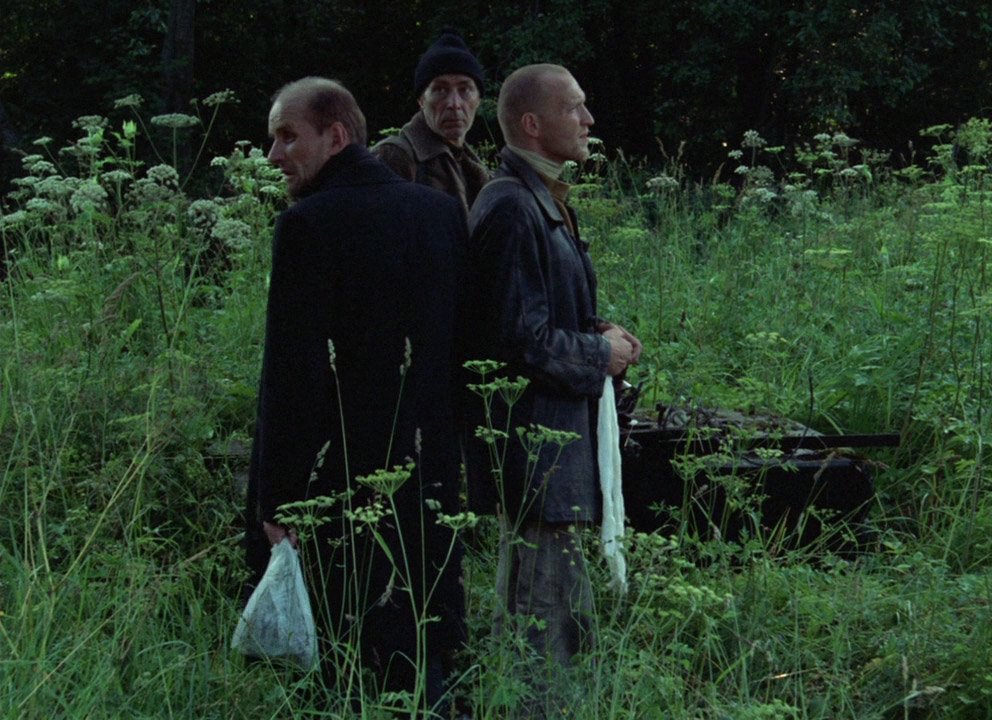
Article by Zaš Brezar, exploring the interplay between low-res design and the transience of landscapes, this essay foregrounds the notion of resolution, enquiring about a dynamic interaction with landscapes in flux:
“Low resolution in aesthetic terms is a choice, a strategy for perceptual engagement that resists immediate recognizability and high definition of meaning. Low resolution in practice, however, is not a choice—it is the limit of what landscape architects can do, a threshold of capacity. This is not a failure but a sober recognition of how things are—messy and impossible to resolve. Low-res operates beyond the illusion of control and instead emphasizes adaptive, relational, and negotiable processes.”
4. Forest Typologies

An overview article by Urška Škerl with a selection of projects on forest typology:
“What was before seen as a part of a productive landscape (at large, it still is), is now becoming a metaphor for something that we should as a society strive for – biodiversity, carbon sequestration, change of climate change, multispecies justice and rewilding. Forest is a typology that is ‘on the rise’ yet rediscovered in a new way, as a design choice.”
3. Taking Root

The article, based on an inaugural lecture by Joost Emmerik, a garden and landscape architect and Head of Landscape at the Academy of Architecture in Amsterdam:
“We have created this image of nature together. And we can therefore also dismantle this image of nature together and replace it with an alternative based on a radical principle of equality. Moving past the idea that human life is more important than other-than-human life. Moving past the idea that there is a separation between culture and nature. Moving past the entire designation of nature.”
2. From Grey Infrastructure to Green Socialstructure

Article by Kristoffer Holm Pedersen, from SLA:
“Converting grey infrastructure into green socialstructure leads to more inclusive, adaptable, and environmentally resilient public spaces that serve both ecological and social functions. The benefits extend beyond aesthetics – these transformations drive economic growth, improve public health, and mitigate the effects of climate change. So, the real question is not whether cities can do this. The question is: Why aren’t they?”
1. Deep Landscape


Article by Elisabeth Sjödahl, a Professor at The Oslo School of Architecture and Design (AHO):
“What do we actually know about the ground on which we stand, and how does it relate to our landscape projects? Interventions on the surface of the landscape affect the underground as much as they are conditioned by it. Many processes pass through the grade of the ground, relating to water, energy, ecology and vegetation, with trees bridging above- and below grade. Organic matter is created in the ground, carbon is captured and stored there, and it is the habitat of various species. If we, as landscape architects, aim to incorporate ecology and hydrology into project development, the design phase must incorporate a thinking of above- and below-grade as one”.


buenas tardes
me encanta la selección, he leído practicamente todos los artículos seleccionados y más.
Excelente guía y reflexión filófica acerca de las prácticas paisajistas del entorno.
Buen año.
Silvia Wichmann
Argentina