



The theme for this article was inspired by urbanist Michael Benedikt’s essay Environmental Stoicism and Place Machismo, published by Harvard Design Magazine in 2002. Benedikt describes environmental stoicism as the capacity to endure or tune out places that are cheap, banal, or demeaning, environments to which “people would normally react with despair”. It is what allows people to move daily through potholed streets, fluorescent workplaces, and identical suburban strips without registering them as failures, retreating instead into the compensatory worlds of screens and entertainment. Taken a step further, Benedikt writes, environmental stoicism hardens into place machismo, a “widely admired avant-garde position, one which asserts that better than inadvertent banality is deliberate and exaggerated banality.” He criticises the architect’s affection for junkspace, the Koolhaasian interest in railroad bridges, infrastructural remnants, back alleys, and the raw urban underside as somehow closer to reality than designed beauty. Against both conditions, Benedikt argues for place sensitivity, the willingness of designers to make environments that are, without embarrassment, healthful, gracious, and kind to human purposes.
In this article, we review how Benedikt’s reading might translate to landscape architecture. The translation here is not straightforward, as landscape is not an object: neglect and succession can look identical, and what registers as disorder may actually be a functioning habitat. The discipline’s engagement with difficult conditions, fringe landscapes, post-industrial sites, climatically threatened waterfronts, does not map straightforwardly onto his categories. But his framework remains useful precisely because it forces the question: when landscape architecture works with harsh or marginal conditions, is it practising place sensitivity, or has it drifted into a form of place machismo in which the visual experience substitutes for a genuine transformation?
Junkscapes
Benedikt recognises environmental stoicism as a “calm acceptance of what cannot be improved”, yet warns that “stoic indifference to the discomforts of the immediate environment cannot be considered a virtue”, as it may, over time, lead to the toleration of neglect and the gradual degradation of urban and natural environments. In the article The Technological Alibi: Performance Without Spatial Ambition, Ibrahim Diaz coins the term “junkscapes” for landscapes of compliance to market logics, a landscape equivalent of Koolhaas’s junkspace. We borrow the term here in a broader sense: not only the corporate forecourt or the highway median, but any landscape that absorbs its conditions without resistance, whether through budget pressure, regulatory compliance, or the professional normalisation of diminished expectation.
The inverse risk is equally real and less addressed. Messy, fringe, post-industrial, and neglected landscapes have become, over the past two decades, a recognised field of landscape architectural interest. The valorisation of the unmanaged, the successional, the liminal, the industrial remnant, carries genuine ecological and cultural arguments. It also carries the risk Benedikt identifies in place machismo, that the embrace of harsh or marginal conditions becomes an aesthetic and intellectual posture from an exterior and distant position, focusing on the surface-level, visual experience.
Benedikt’s answer is place sensitivity. The projects selected for this article engage with conditions that could be justified as either environmentally stoic or part of the spectacle, but create something more demanding: they embrace, reveal, or reframe what the site offers without aestheticising it into passivity.
Reframing the banal
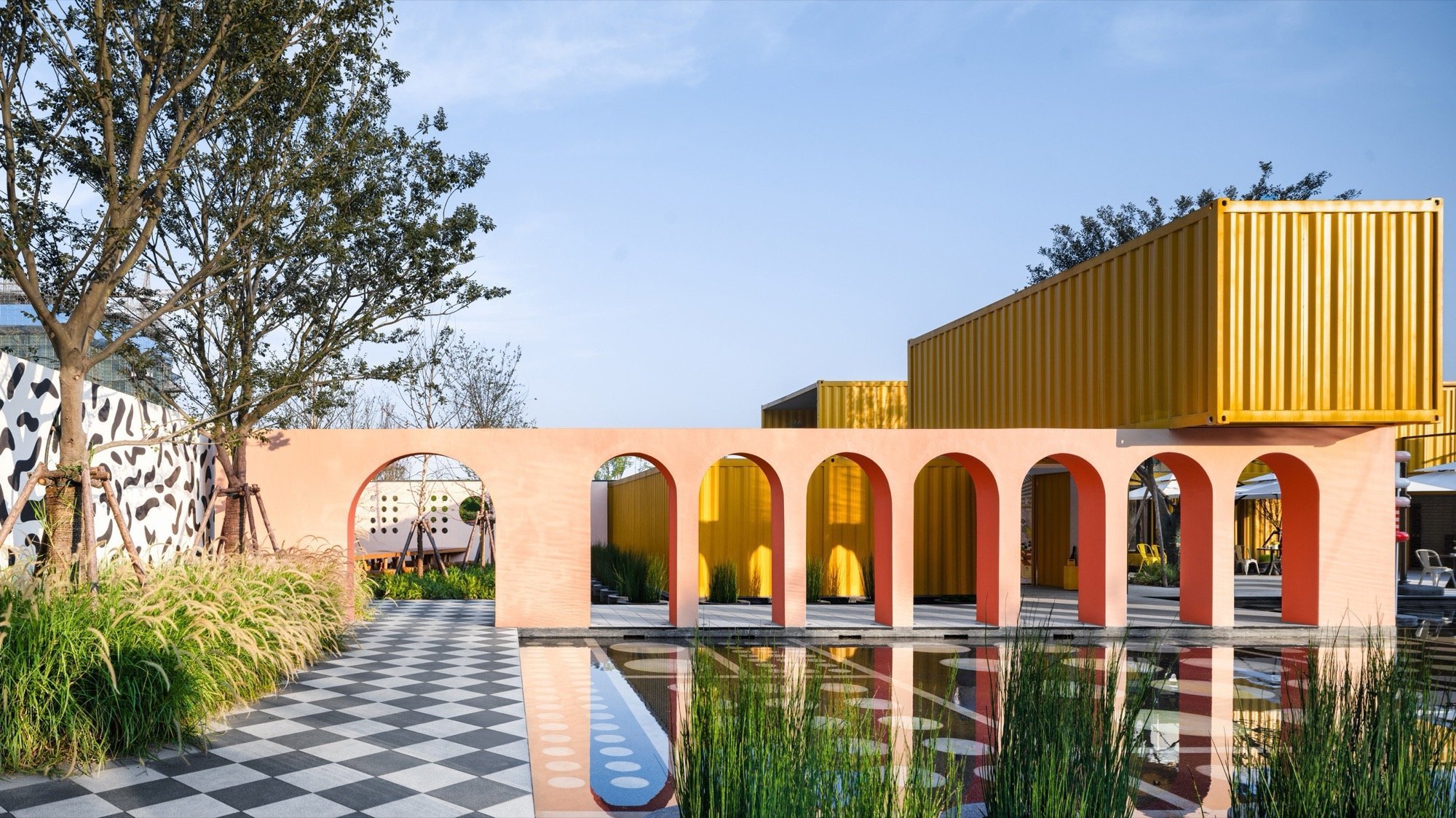
The most direct response to the junkscape is to work within its constraints while refusing its logic. The Shipping Container Landscape by BAM confronts the conditions of a real estate showroom, a typology that typically deploys high-end materials to simulate permanence and value, with the opposite: shipping containers that make temporality explicit rather than concealing it. The project challenges the design aesthetics of illusion and cover-up, giving a flashy yet honest framework.
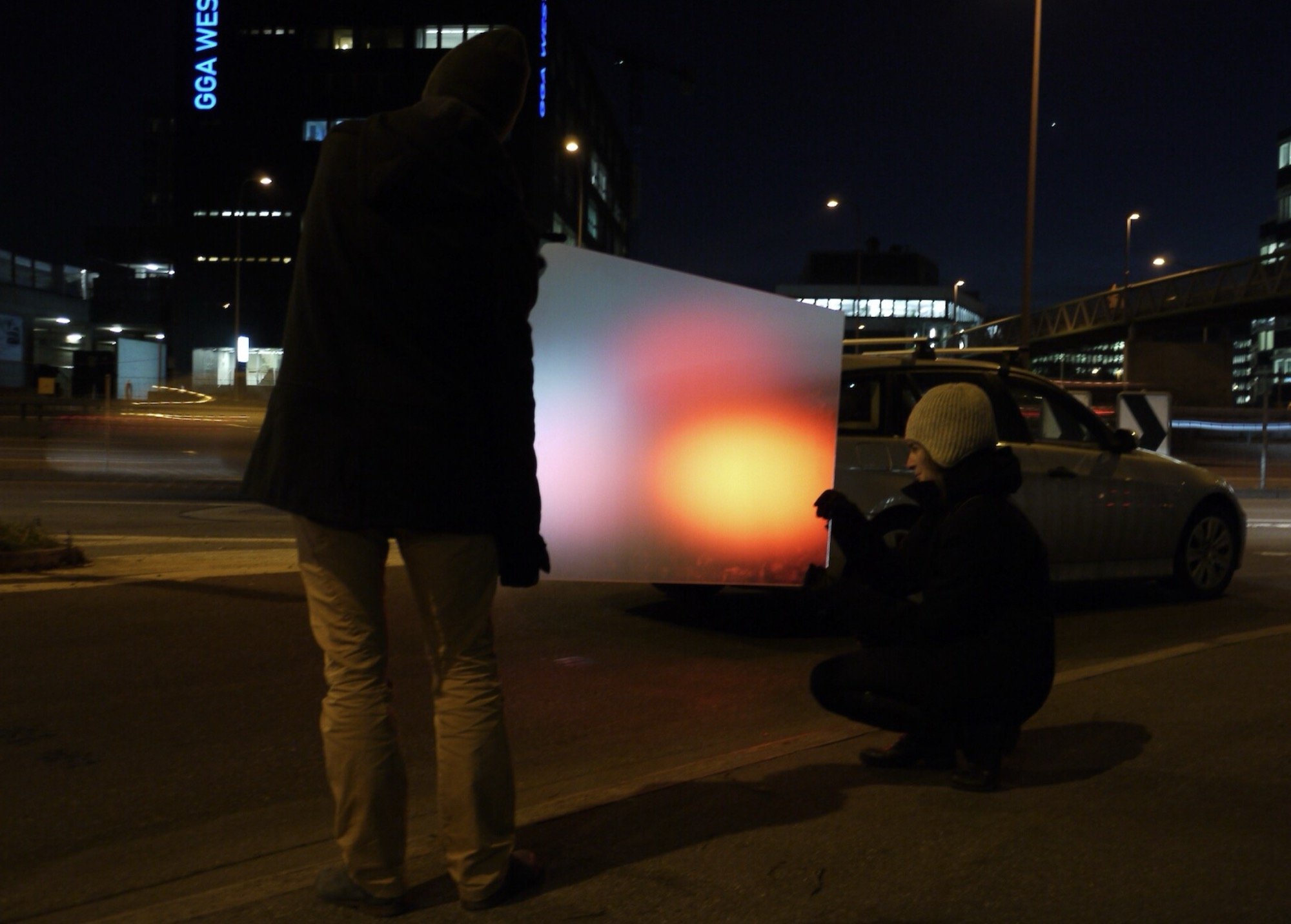
Robin Winogrond’s Traffic Sound Screen addresses a different compliance condition. Sound walls are required infrastructure, and they are almost invariably of poor design quality, amplifying rather than mediating the banal everyday urban environments they accompany. Here, a transparent wall with a grainy texture blurs passing traffic into shifting, light-dependent patterns. The wall does not deny its function. It makes something from it. The project is currently under construction, and we will report on it soon.
Reading the post-industrial
Chiara Geroldi, in her article Moved Earth: Designing Landscapes with Discarded Fill, argues that making the constructedness of a landscape visible helps convey its artificial nature and can raise awareness about the waste embedded within it.
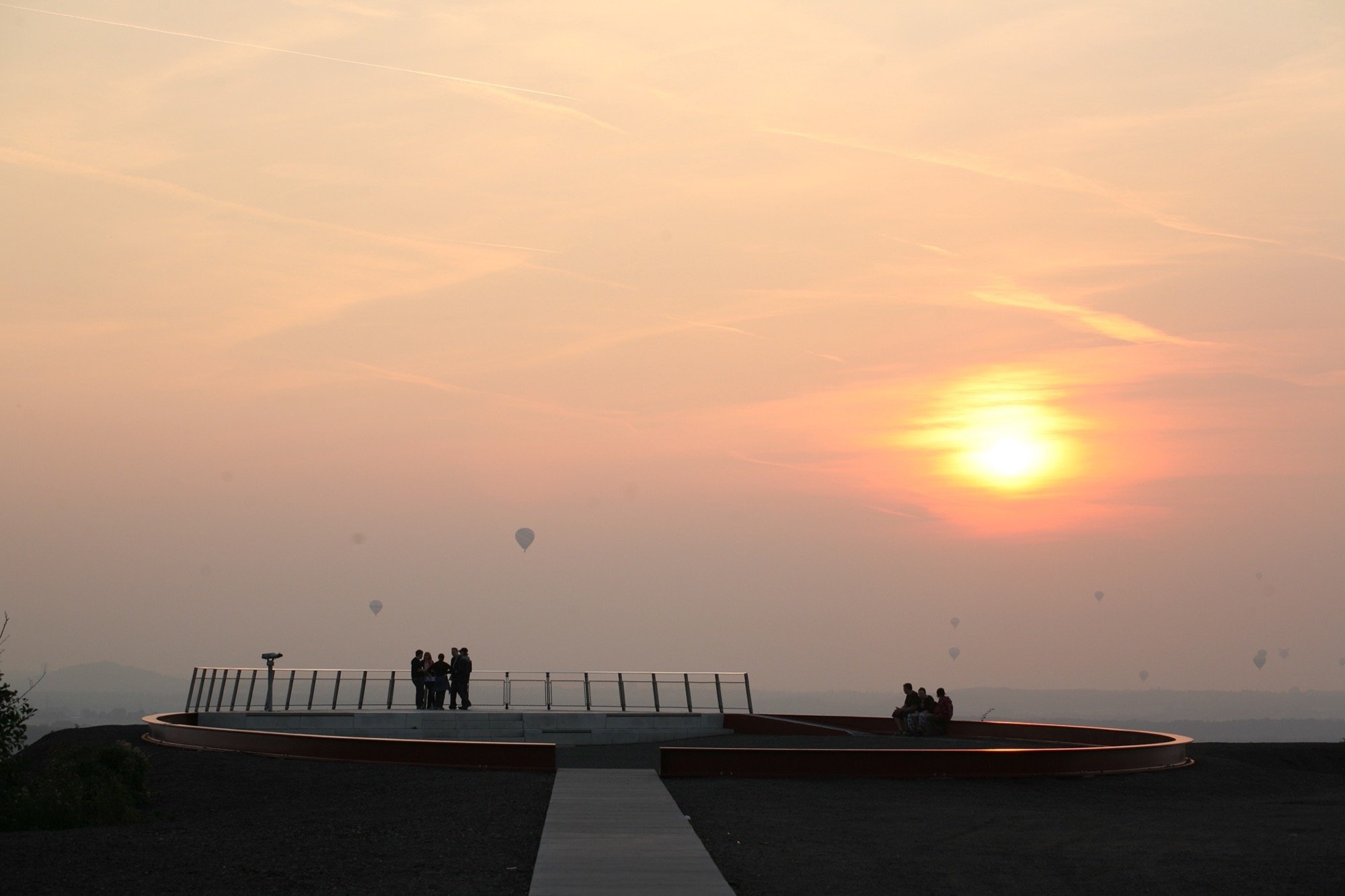
Carl Alexander Park by DTP works within this obligation on a slag heap rising 80 metres above the former mining landscape near Aachen, close to the border where Germany, Belgium and the Netherlands meet. The decommissioned heap, left largely undisturbed since closure, has gradually developed a varied flora and fauna; parts of the site now carry protected conservation status. The absence of human activity, over time, created its own ecology. A ridge path leads through the pioneer forest to the plateau, where the climb opens into a wide view over the surrounding mining landscape and the vegetation of the slag heap below. The past is not covered over. The design builds an experience on top of what succession has already produced, and holds both simultaneously in view. The amplification of an encounter with a ruinous landscape could be regarded as a form of place machismo, but is restricted by incorporating ecological process into the experience.
The ambiguous landscape
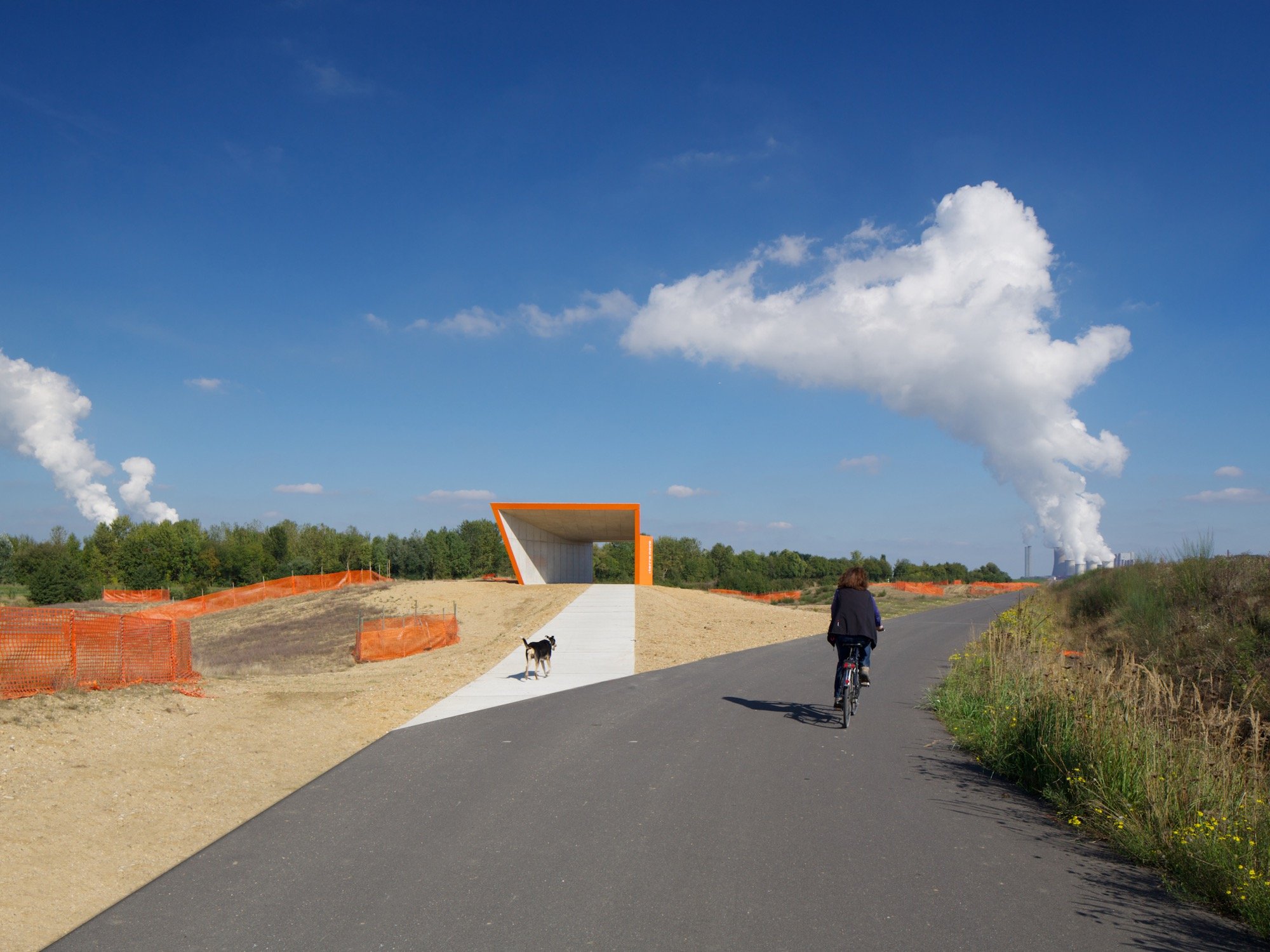
Terra Nova BiosphereBelt by arch42 and bbz landschaftsarchitekten does not resolve as cleanly. The 14 km corridor, cut through the landscape of active open-cast lignite mining in the Rhein-Erft region, retains the industrial geometry of the former excavation material belt while planting its interior with reconstructed pre-glacial landscape types: bald cypress, pine woodland, dry sand dune grassland. Four million cubic metres of tertiary excavation material were moved to form the terrain.
The project competes with the scale of the mine rather than retreating from it, and uses strong colour and educational content to insist on its agenda, demonstrating what a future after coal could look like. It works with borrowed scenery, opening views over the active mining landscape that surrounds it. The project deals with the uncomfortable spectacle, and while integrating it, it helps in phasing it out.
Amplification of foul conditions
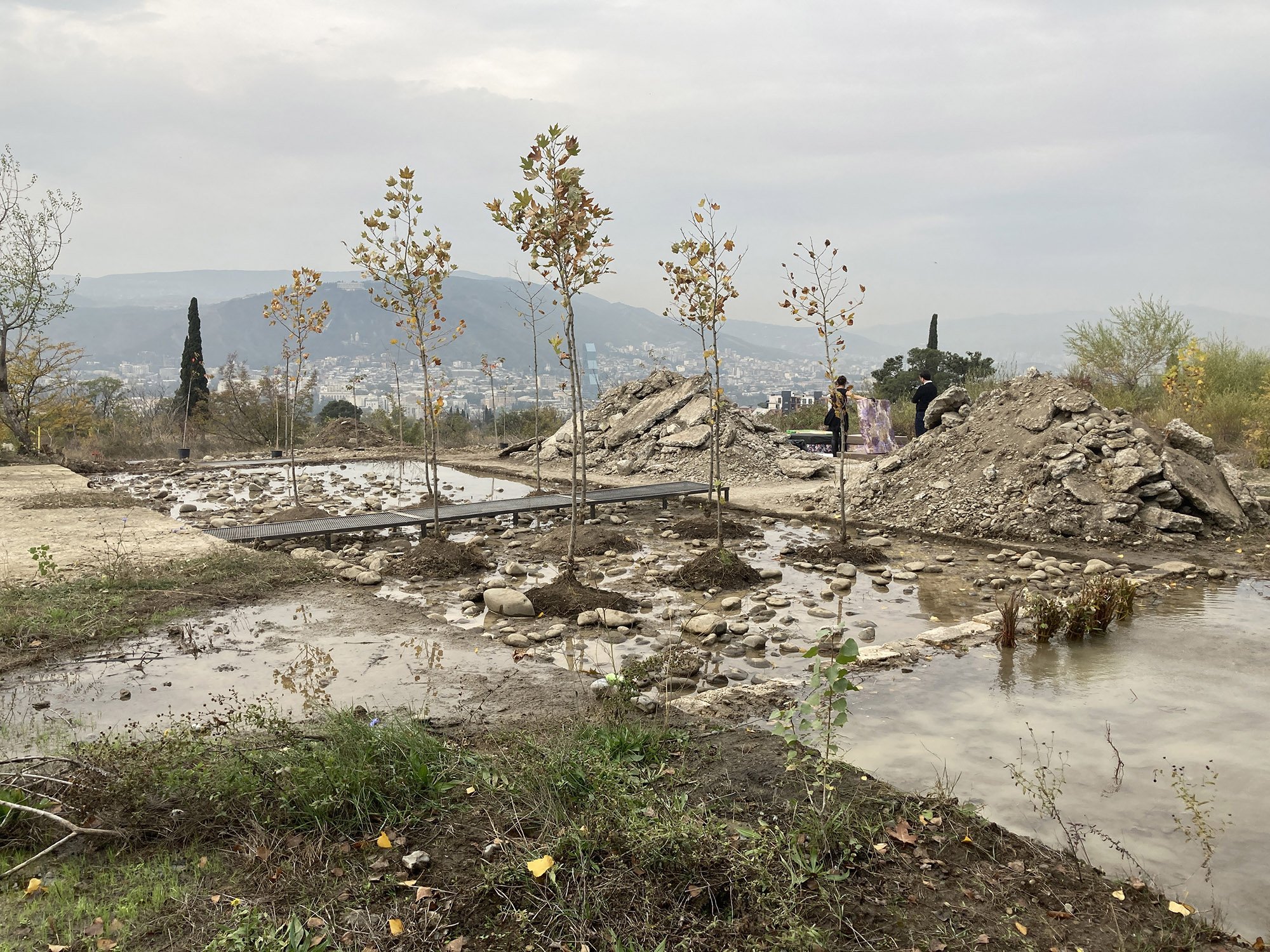
Arsenal Oasis by Ruderal in Tbilisi, constructed for the 2020 Architecture Biennial, begins with a different kind of given condition: a leaking water pipe from the former Soviet army base, which neighbours had already begun to channel informally into small basins. The accidental surplus of water had created an emergent wetland on an otherwise dry urban wasteland. The design did not correct the fault. It followed it reshaping the surface to invite water, removing concrete slabs to open soil, fabricating mesh panels to guide movement through the wetland, laying pavers that made the remnant structures of the garrison readable rather than erasing them. Building a project around the broken water pipe instead of repairing the leakage could be merely aesthetic, without addressing the ecological, social and wider spatial issues.
The spectacle of climate change
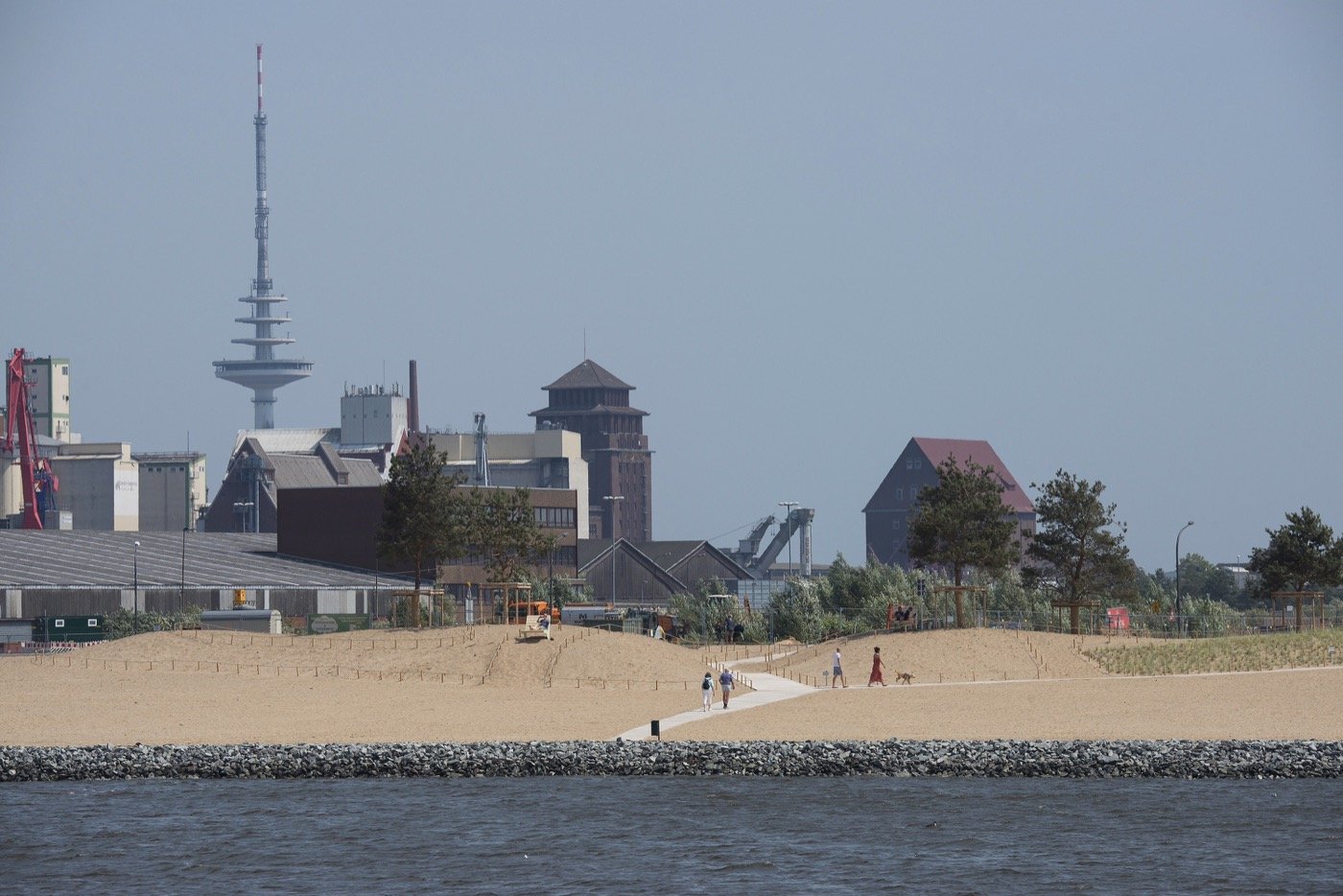
Where sea level rise makes retreat impossible and hard infrastructure alone cuts the city off from its waterfront, the design question becomes how to absorb a technical requirement without surrendering to it. In Waller Sand Bremen, A24 Landschaft approached raising the dyke not as the construction of a barrier but as the making of a landscape. The vegetation does not obstruct views over the industrial port. The raised ground integrates its surroundings without overidentifying with them. The beach park, the tidal garden, and the boulevard are not consolations for the loss of the waterfront but a reclamation of it, built on top of necessary engineering. The buffer landscape may eventually be engulfed. Until then, it is in use.
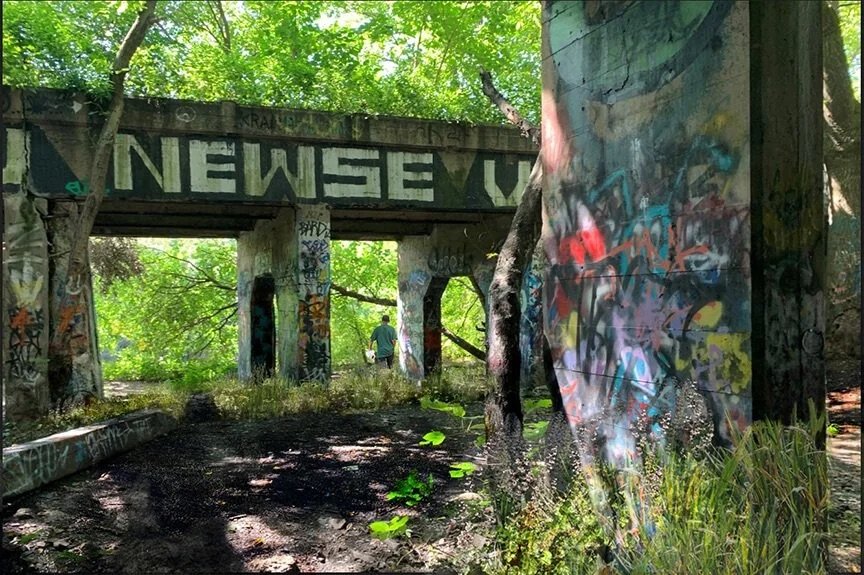
Graffiti Pier by Studio Zewde in Philadelphia works with a liminal condition of an abandoned pier long claimed by the street art community, now subject to shoreline reinforcement required by sea level rise. The design proposes using the protective wall as a surface for that community to continue engaging with the site and with climate change directly. The project’s ambition is to let the response to climate change be authored, at least in part, by those who already have a relationship with the place.
Minimal maintenance
The final position is the most demanding and the least visible. Ecological aesthetics are gaining prominence in public spaces, but they can be perceived as neglected or unfavoured by users. Monitored ecological succession requires a professional engagement more complex than a mowing schedule: seasonal, iterative, and sustained. It is also the form of engagement most easily abandoned when budgets contract or client interest diminishes. When that happens, the distinction between designed succession and simple neglect disappears, and the landscape drifts toward the junkscape from the other direction.
Wuhlepark in Berlin by gruppe F, completed in 2011 as an urban fringe park in Marzahn, developed its own character over six years of reduced maintenance. When the designers returned in 2017, they found conditions that had not been planned but were genuinely coherent: spontaneous vegetation, self-organised spatial qualities, and an ecology that had exceeded the original brief. The project ages beautifully, despite limited maintenance. It is not a celebration of neglect; it has developed something the design had made room for.
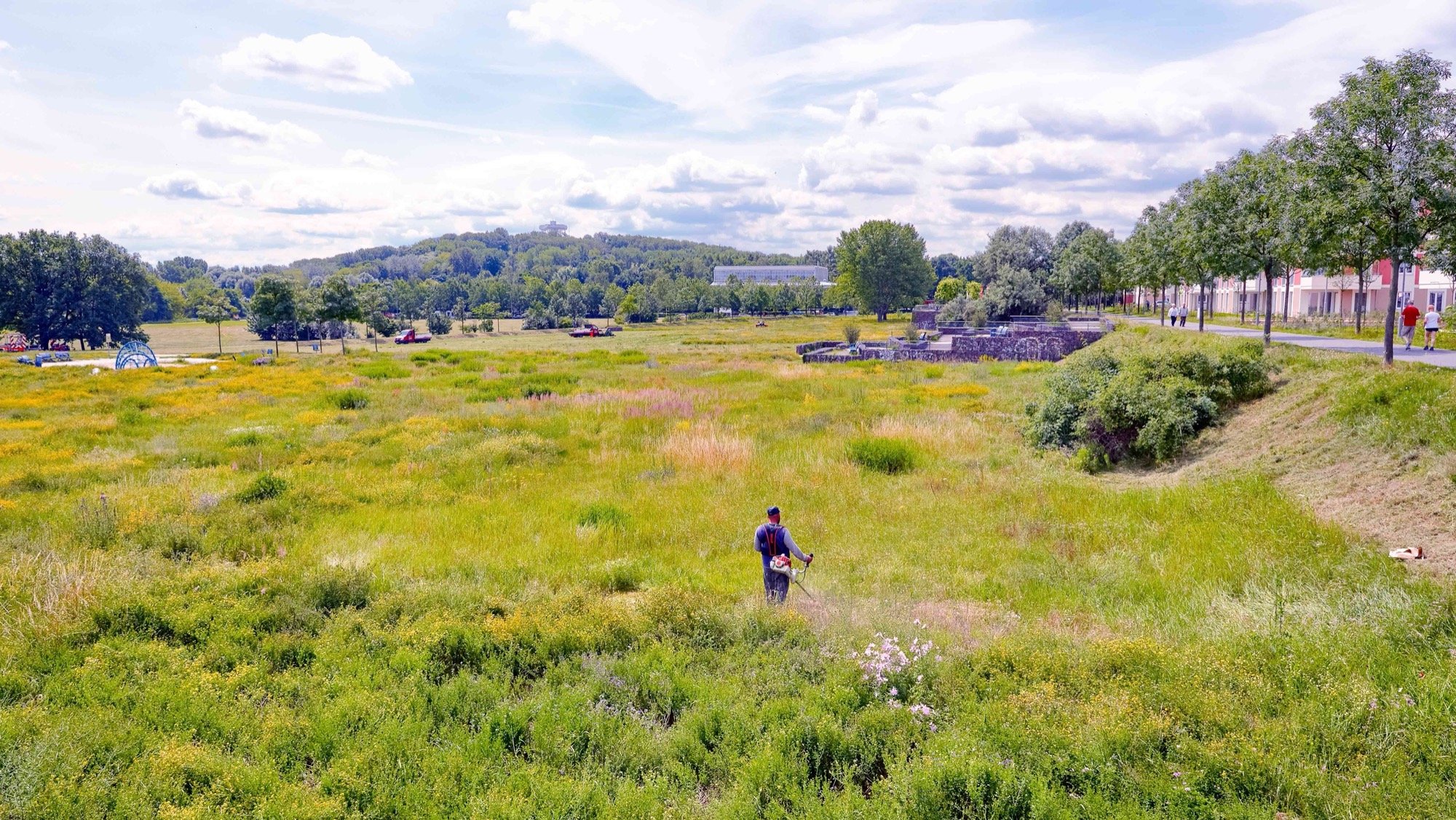
The ongoing conversion of Tegel Airport in Berlin, where gruppe F partners with Atelier LOIDL and Grün Berlin, scales this engagement considerably. The airport was decommissioned in 2020, and the heathland and dry grassland biotopes that established themselves on the former airfield now carry protected conservation status. The Development and Management Plan gruppe F prepared, takes these spontaneous ecologies as the starting condition: ecologically significant, socially complex, requiring stewardship rather than replacement.
Landscape, as the project implicitly argues, cannot be ruinous in the way architecture can. The processes that erode built structures are, in landscape, increasingly understood as generative rather than entropic.
Productive environmental stoicism and the toxic sublime
There is a concept that sharpens the risk running through the above. Jennifer Peeples, in Toxic Sublime: Imaging Contaminated Landscapes (Environmental Communication, 2011), introduced the term to describe the tensions arising when environmental contamination is rendered visually captivating: the pull between beauty and ugliness, the known and the unknown, the urge to bear witness and the risk of aestheticising what should produce discomfort. She was writing about landscape photography, Edward Burtynsky’s vast images of open-pit mines and oil fields, breathtaking and appalling simultaneously. But the concept travels directly into landscape architecture, which is one of the primary means by which contaminated, post-industrial, and climatically threatened sites are made visitable and meaningful to the general public.
The toxic sublime is what place machismo looks like at cultural scale: the visual experience of a condition substitutes for an understanding of it, leaving the visitor awed rather than informed. Against this, environmental stoicism offers something different; the cultivation of restraint and sufficiency as a counter to the consumerism driving climate change. Applied to landscape architecture, a productive stoicism would mean the willingness to work with existing conditions, to be attentive rather than accepting, to act with less force and less material, and to make a project that moves beyond a merely visual story. It means embracing climate and environment as given conditions to which design is attuned, or scaling the brief back to what the project is really about.