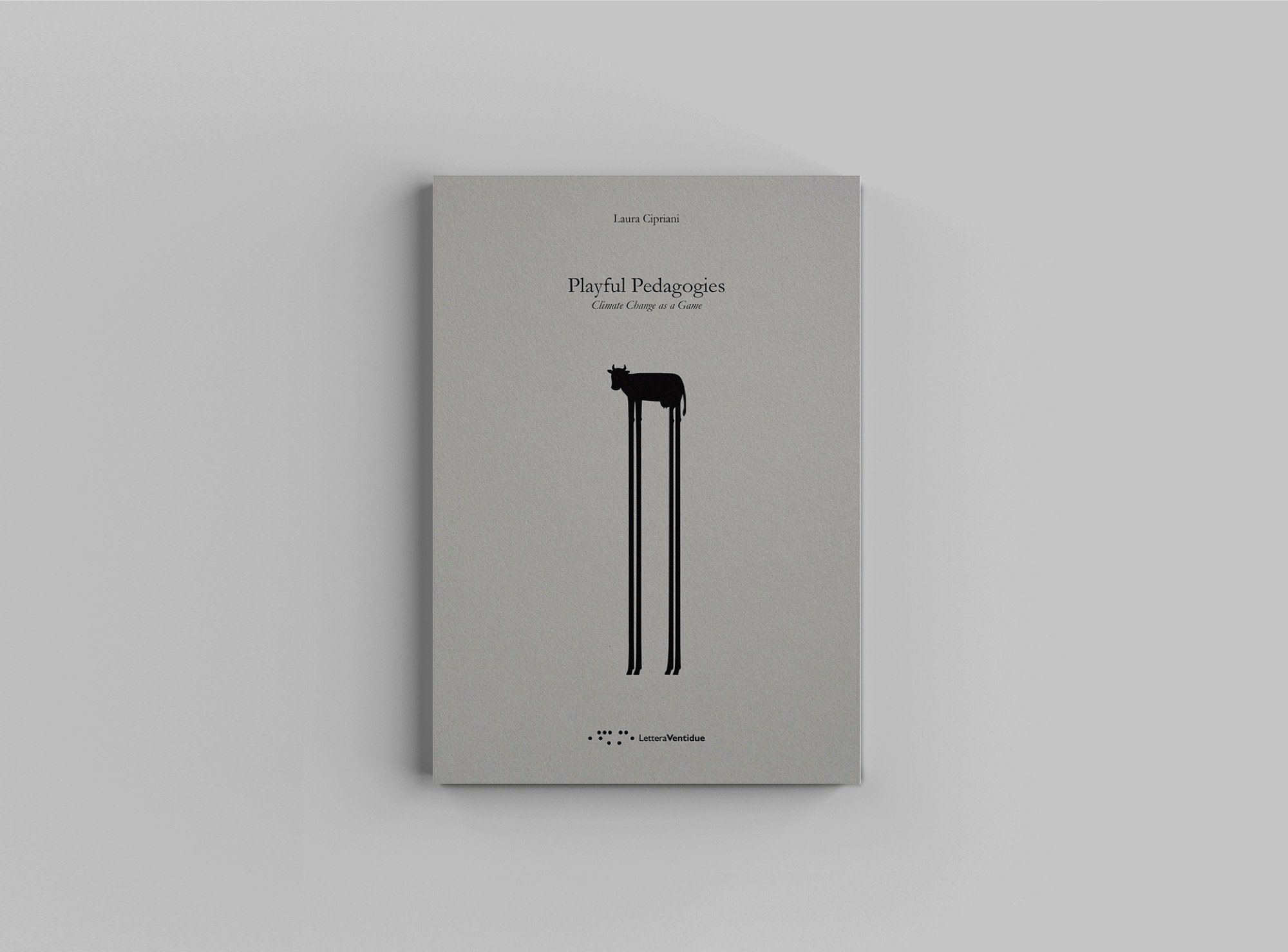
Laura Cipriani’s Playful Pedagogies: Climate Change as a Game advances play as a mode of teaching and as a way for children and students to engage with landscapes under pressure. Published by LetteraVentidue and TU Delft Open Publishing, the book emerges from her Comenius Fellowship on didactical and pedagogical innovation. It addresses the need to cultivate new forms of environmental connection—through exploration, shifting perspectives, immersion, and dissolving boundaries.
However daunting climate change may feel, Cipriani’s aim is to encourage imaginative engagement and, through small acts, rekindle curiosity. One of the central challenges for educators is to empower younger generations to participate rather than retreat. Drawing on alternative educational traditions, including Rudolf Steiner’s Waldorf approach, she argues for weaving more holistic, emotionally attuned methods into curricula that are often dominated by rational problem-solving, leaving little space for intuition, empathy, or affect to sit alongside analytical skills. Entrapped in existing worlds and unable to let go of the known, how can children and students teach us, teach one another, and help co-create the landscapes of tomorrow? Or, what would a cow have to say? We must admit it is not easy to shift to such a perspective.
Let’s begin with the book’s subtitle: Climate Change as a Game. It’s a bold position to take, playfulness set against the gravity of threats to collective well-being. Younger generations already shoulder the weight of inherited conditions, and they are expected to design for climate change and the future, which is no small undertaking. What tools does this book offer, and whom does it address—educators, or students?
The landscapes of tomorrow will not stay still. I often remind myself that younger generations will spend their entire lives in changing environments. Climate change and ecological shifts will become part of their daily experience, not just occasional disruptions. This realization has led me to ask: how can we better prepare them for these realities? How can we nurture their analytical skills as well as their emotional intelligence so they can adapt with creativity and resilience? How can we expand their knowledge and foster their imagination and strength?
This book is my effort to answer these questions through a methodological experiment for students and educators. It shares the results of the Comenius Fellowship focused on didactical and pedagogical innovation. For me, the fellowship was more than just a professional opportunity; it was a chance to experiment with teaching methods during a time when I believed our educational approaches were insufficient to address the crises we faced. I wanted to go beyond simply transmitting information about climate change.
As a title, “Climate Change as a Game” presents a paradox. Of course, climate change is not a game; it is a serious and urgent issue to face. But what if we could reframe our attitude toward it? Would this help us take action? Too often, I have seen education narrowly focused on rational knowledge, threats, and disasters, which leaves students feeling powerless. I aimed to engage students in a collective process of action, reflection, and play—one that would foster not only critical understanding but also hope, creativity, and an emotional connection with nature. The fellowship provided a space to develop a framework where science and art, reason and emotion, could meet and coexist.
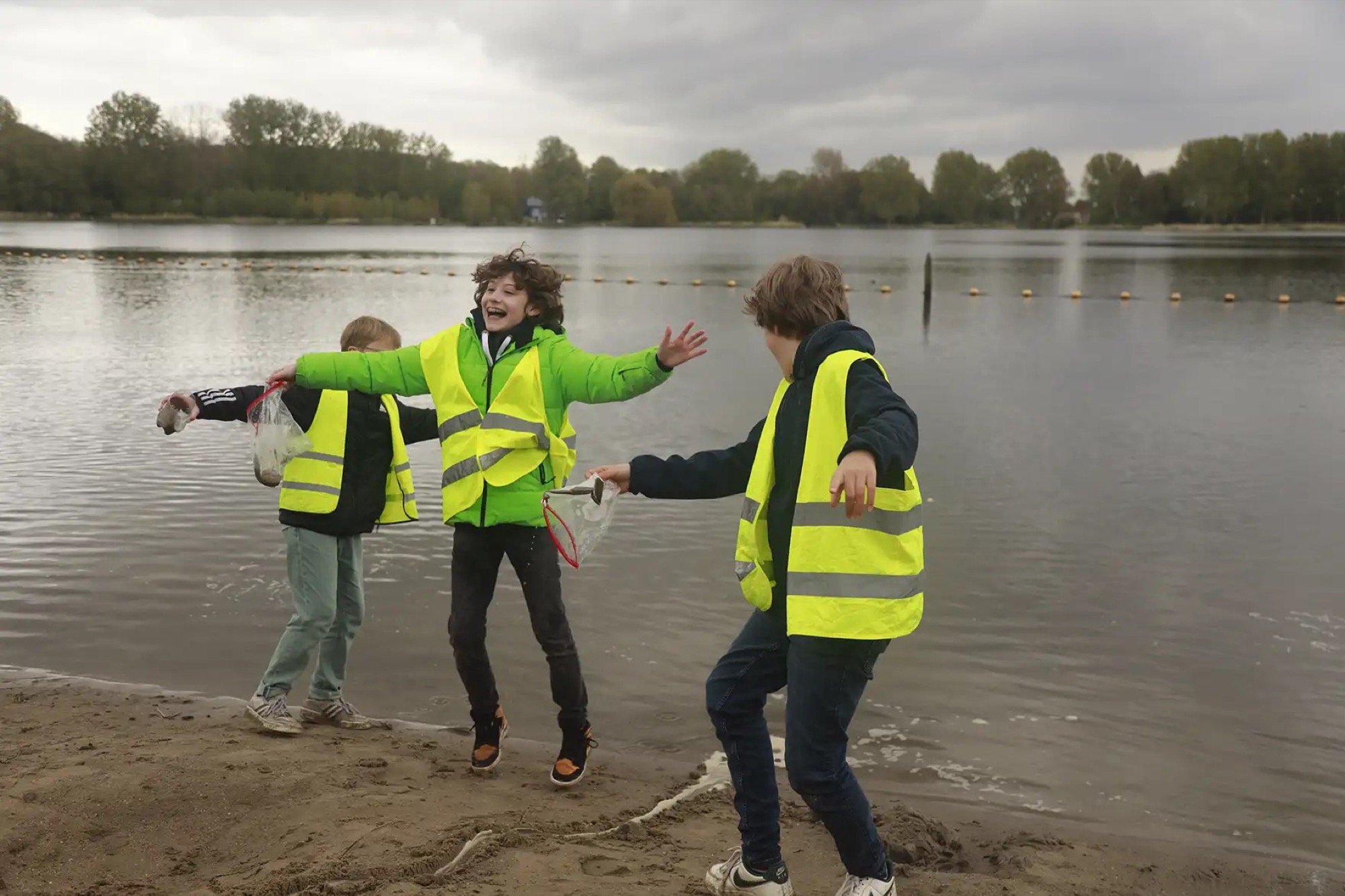
Play became the central focus of this experiment. I have long believed that traditional education can leave students passive and disconnected from the questions it addresses. Play, on the other hand, demands presence. It is immersive, participatory, and embodied. It encourages learners to act, feel, and imagine. In the context of climate change, play allowed students to experience the problem not just as an abstract crisis but as a shared reality where their creativity could make a difference.
Further on, the book places children and students on the same plane, linked through play, creativity, learning, (co)creating, and action, as ways of connecting with their environments. It suggests children are students, and vice versa. How does the book handle the differences or overlaps between primary and higher education?
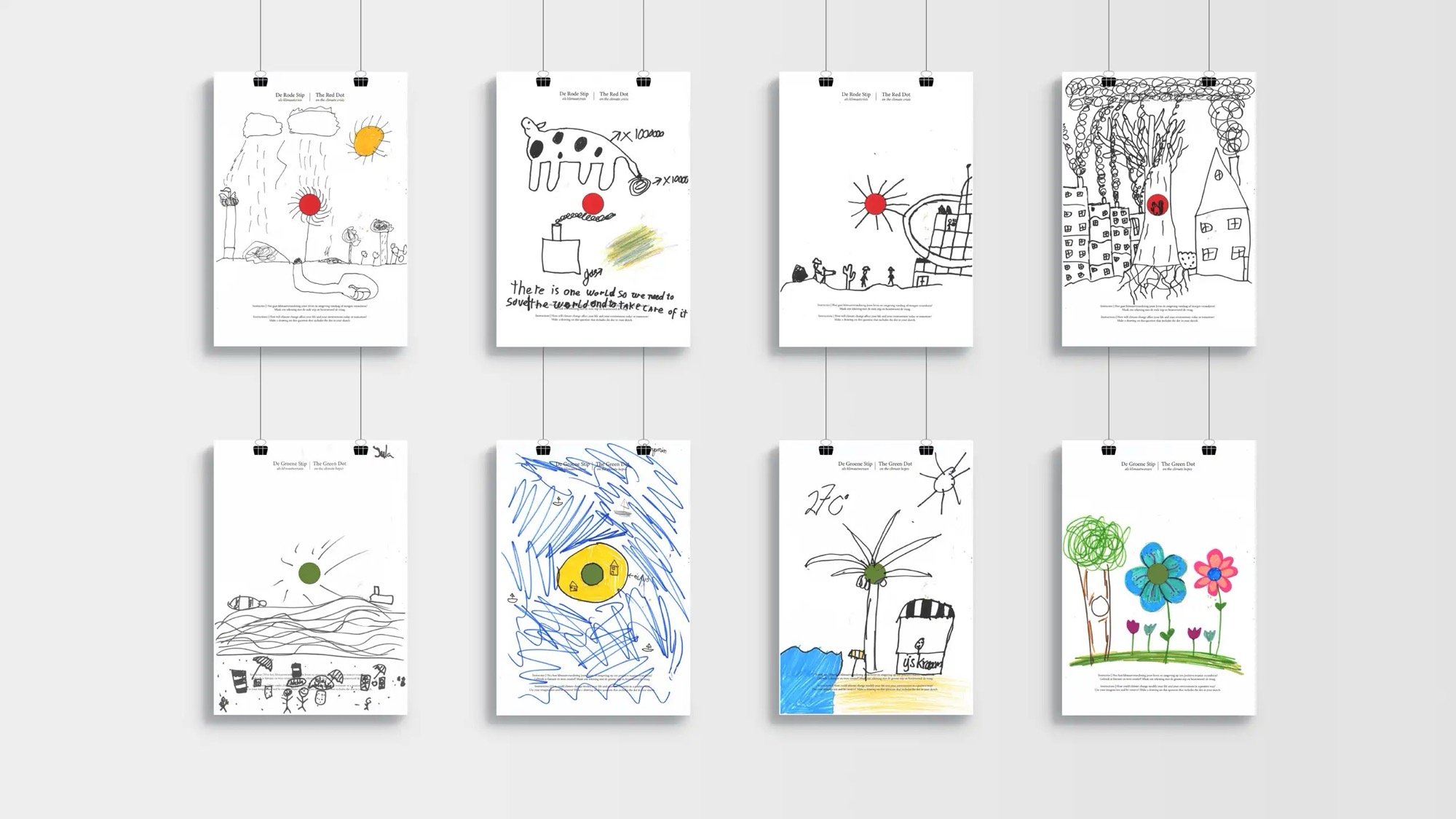
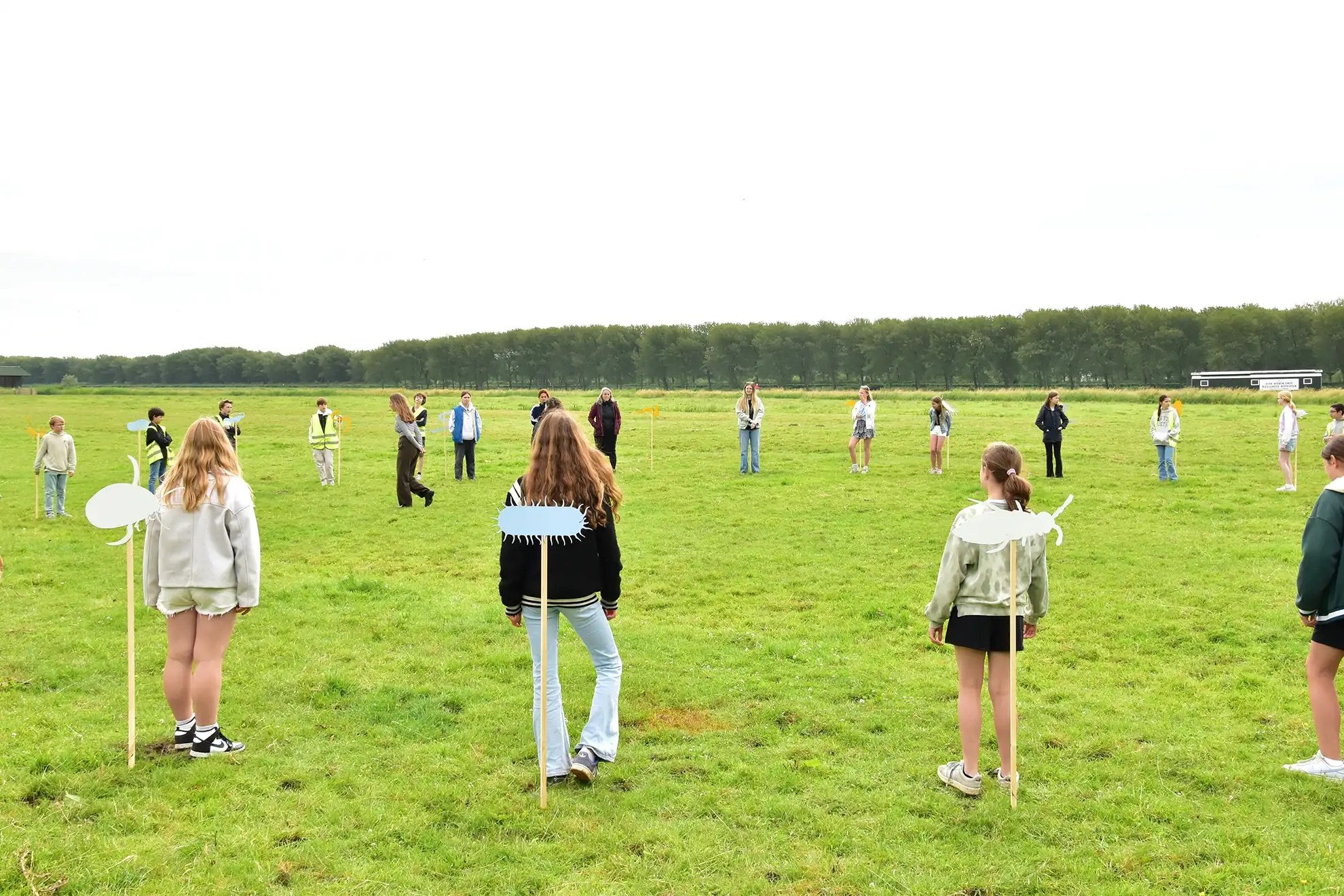
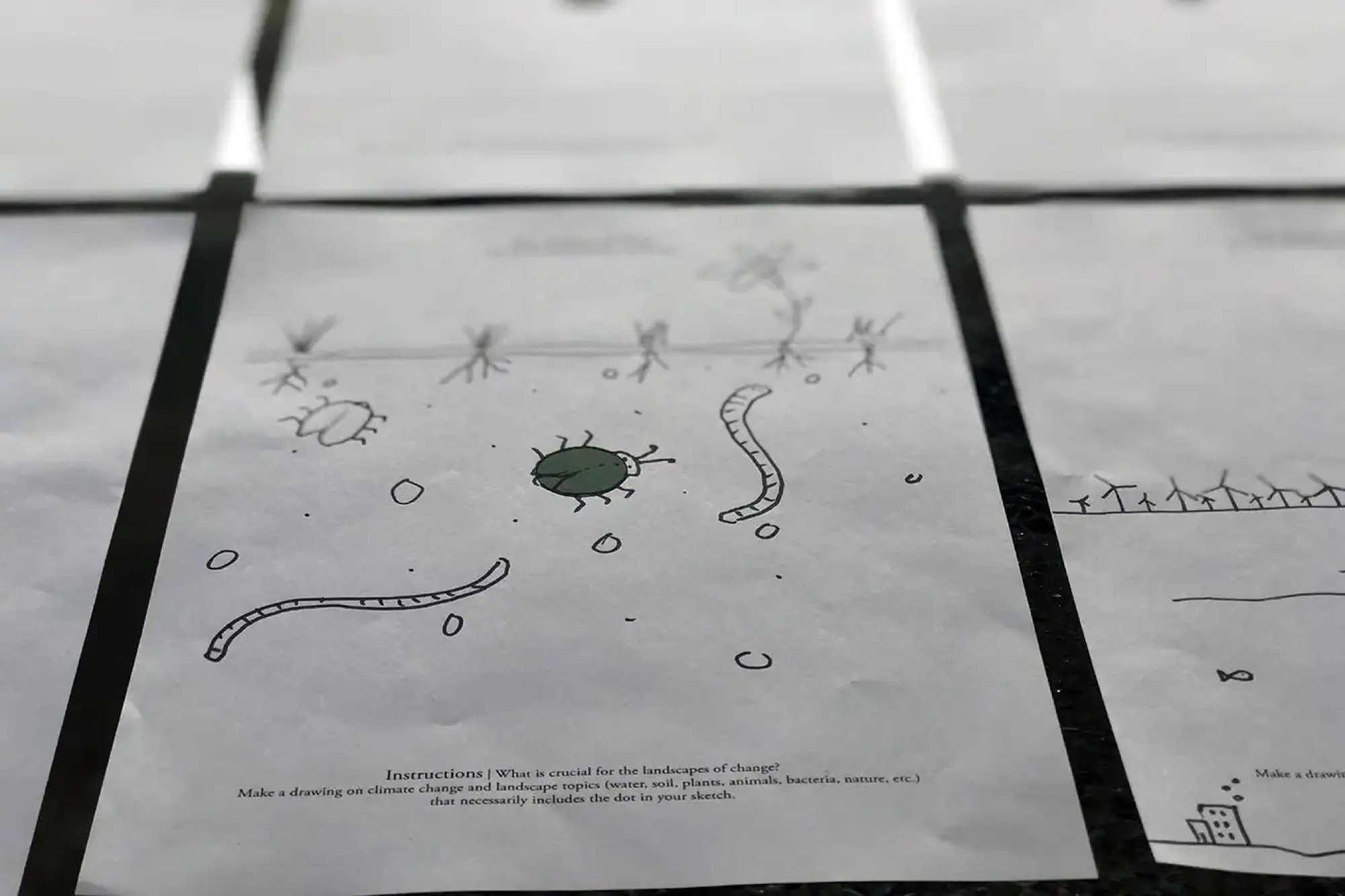
In practice, this involved asking students of landscape architecture, urban design, and architecture to explore the rural and peri-urban landscape of Delftse Hout in the Netherlands, a place where soil changes have contributed to climate change. They were encouraged to integrate themes of play, design, and climate change, and to act as teachers for a class of children, collectively exploring, (co)designing, and (co)creating the landscape, ending the process with a shared, playful installation in the landscape.
The main pedagogical innovation was having university students become teachers for primary school children. Watching this process, I saw my students step into new roles. They were no longer just learners; they became facilitators, guides, and, as I call them, agents of change. This shift was profound—not only for them but also for me as their instructor. One of the most rewarding moments was seeing them realize their ability to take action in the world, not just to study or illustrate it.
The outcomes surpassed even my most optimistic expectations. What began as an experiment evolved into a cycle of collaboration, connecting university students, children, parents, teachers, farmers, and even (in)visible living organisms—all sharing and exploring knowledge through play. It became a virtuous cycle of learning for everyone involved. TU Delft students acted as teachers for the children, who then became teachers for their parents, creating a gentle chain of learning that extended beyond the classroom.
Most notably, they started approaching climate issues not just with seriousness but with joy. This was perhaps the most significant result: seeing hope and play return to a field often clouded by despair. And despair usually does not lead to action.
From the other end, what does the climate crisis demand of educators? Does it call for a shift away from ex-cathedra teaching towards a more engaged curriculum and, dare one say, oblige teachers to become playful again?
The theoretical foundations of this course come from my fascination with the words “play” and “game.” Their etymologies revealed something important to me. Play originates from the Old English “pleg(i)an” (“to exercise”) and “plega” (“brisk movement”), highlighting spontaneity, joy, and movement similar to dance. Conversely, game comes from the Old English “gamen” (“amusement,” “fun”), signifying structure, rules, and goals.
As I reflected on these dualities, I realized that this distinction revealed something essential: education must embrace both aspects—the emotional dance of play and the rational structure of games—if it aims to prepare students for the climate transition. This insight has since shaped my teaching philosophy.
As the course progressed, I observed students engaging in what I came to describe as three levels of knowledge inspired by Rudolf Steiner’s writings: thinking, feeling, and willing. They learned theories; they experienced emotions; they acted with their hands and bodies. By working directly with landscapes and interacting with children and living creatures, they developed not only knowledge but also empathy and a sense of responsibility. I felt that this attitude resonated with the ancient idea of the anima mundi, the soul of the world, and of Comenius’ pansophic principle of teaching “all to all, from every point of view.” Both guided my belief that nature itself must serve as an educator and that pedagogy should be universal, relational, and holistic. These philosophical anchors gave me confidence that we were not simply playing but recovering something essential about learning itself: that it must be rooted in nature, in experience, and in connection.
From Huizinga’s Homo Ludens, I recall that a game functions only so long as all participants agree to be present; once someone steps out, it collapses. You already explained play versus game, but I wonder whether you have thoughts on how playfulness can be taken seriously, how it might become a way of life, a state of being.
Huizinga’s Homo Ludens illustrates that play relies on voluntary participation and shared belief, making it both delicate and powerful. Being “always in” doesn’t mean living in a constant game; it means maintaining a playful attitude—a willingness to shift perspectives, imagine alternatives, and stay adaptable. This isn’t the opposite of seriousness; it’s a way of engaging with the world through curiosity rather than rigidity. By embracing new roles and viewpoints, students and children explore different worlds, beings, and possibilities; in doing so, they begin to see their own world in a new light. What if you were a cow, a worm, or a cloud? The eyes of the cows or those of the worms shape a different cosmos.
Play, in this context, is not escape but a return—a return to curiosity, joy, and the vital rhythm of coexistence. It is where learning becomes an act of hope, and where design, landscape, and imagination come together in a shared promise: that the future, like Earth itself, can still be shaped with care.
* This work was sponsored by the National Education Research Organisation (NRO – Nationaal Regieorgaan Onderwijsonderzoek) / Project number 40.5.23865.022 / Comenius Program 2023-2025 / Climate Change as a Game. (Co)Designing with Children the Landscape of the Future by Laura Cipriani
*Authors’ Contributions Statement:
Laura Cipriani and Urška Škerl conceived the interview for Landezine about the book “Playful Pedagogies.”
Urška Škerl formulated the interview questions, while Laura Cipriani wrote the responses.
Laura Cipriani is an assistant professor of landscape architecture at Delft University of Technology and a founder of Superlandscape, a landscape and urban design firm. She holds a Ph.D. in Landscape Urbanism from IUAV, a master’s degree in landscape and urban issues from Harvard GSD, and a master’s in Architecture from IUAV.
Her current research addresses climate change issues, starting from the materiality of water and soil, and adopting (co)design approaches. She authored and edited several books, including Fluid Soils. (Co)Designing for the Wadden Sea Landscapes(2024). (Co)Designing Hope: Aqueous Landscapes in Transition was published with Routledge in 2025, featuring numerous projects and research on the “body of water,” including contributions by landscape architects, geographers, academics, engineers, and artists.
To provide the best experiences, we use technologies like cookies to store and/or access device information. Consenting to these technologies will allow us to process data such as browsing behavior or unique IDs on this site. Not consenting or withdrawing consent, may adversely affect certain features and functions.
Functional
Always active
The technical storage or access is strictly necessary for the legitimate purpose of enabling the use of a specific service explicitly requested by the subscriber or user, or for the sole purpose of carrying out the transmission of a communication over an electronic communications network.
Preferences
The technical storage or access is necessary for the legitimate purpose of storing preferences that are not requested by the subscriber or user.
Statistics
The technical storage or access that is used exclusively for statistical purposes.The technical storage or access that is used exclusively for anonymous statistical purposes. Without a subpoena, voluntary compliance on the part of your Internet Service Provider, or additional records from a third party, information stored or retrieved for this purpose alone cannot usually be used to identify you.
Marketing
The technical storage or access is required to create user profiles to send advertising, or to track the user on a website or across several websites for similar marketing purposes.
To provide the best experiences, we use technologies like cookies to store and/or access device information. Consenting to these technologies will allow us to process data such as browsing behavior or unique IDs on this site. Not consenting or withdrawing consent, may adversely affect certain features and functions.
Functional
Always active
The technical storage or access is strictly necessary for the legitimate purpose of enabling the use of a specific service explicitly requested by the subscriber or user, or for the sole purpose of carrying out the transmission of a communication over an electronic communications network.
Preferences
The technical storage or access is necessary for the legitimate purpose of storing preferences that are not requested by the subscriber or user.
Statistics
The technical storage or access that is used exclusively for statistical purposes.The technical storage or access that is used exclusively for anonymous statistical purposes. Without a subpoena, voluntary compliance on the part of your Internet Service Provider, or additional records from a third party, information stored or retrieved for this purpose alone cannot usually be used to identify you.
Marketing
The technical storage or access is required to create user profiles to send advertising, or to track the user on a website or across several websites for similar marketing purposes.